
Dry fruits are convenient, flavourful foods that can add useful nutrients to a balanced diet. Learning different Dry Fruit Names also helps children identify healthy foods and understand how nuts and dried fruits can be included in breakfast, snacks and family meals.

What Are Dry Fruits and Why Are They Healthy?
The term dry fruits commonly include nuts such as almonds and walnuts, along with fruits such as grapes, figs and apricots that have been dried to remove much of their water. Some foods, including peanuts and fox nuts, are also placed in this category in everyday Indian usage.
Nutritional Benefits of Adding Dry Fruits to Your Diet
The dry fruits benefits come from their varied nutrient content. Nuts generally provide plant protein, fibre, unsaturated fats, vitamins and minerals. Dried fruits offer natural carbohydrates, fibre and micronutrients in a concentrated form. However, they are energy-dense and should be eaten in sensible portions.
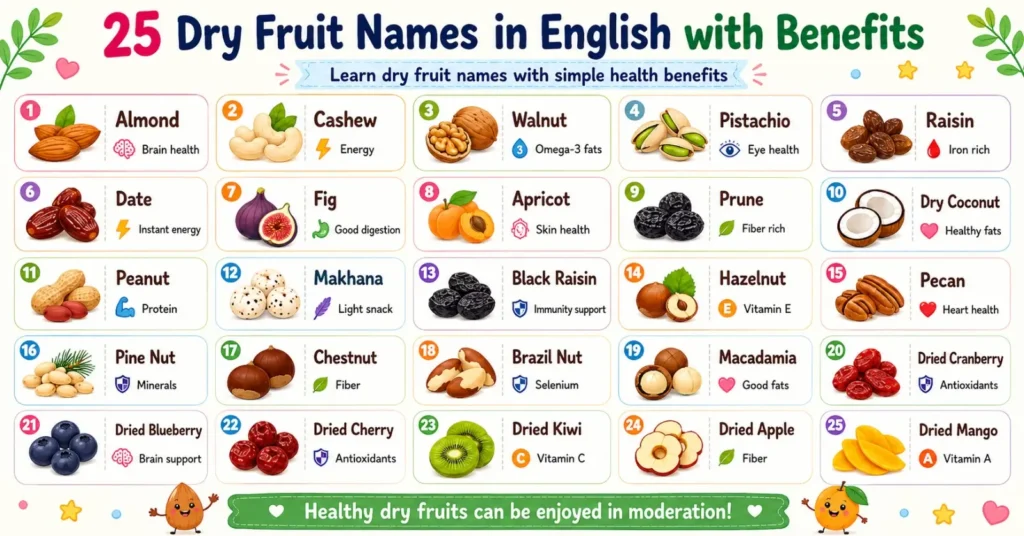
Complete List of 25 Dry Fruits with Their Benefits
| No. | Dry Fruit | Hindi Name (in English) | Common Nutritional Quality | How to Use It |
| 1 | Almonds | Badam | Protein, fibre and vitamin E | Eat plain or add to porridge |
| 2 | Walnuts | Akhrot | Plant-based omega-3 fats | Add to cereal or salads |
| 3 | Cashews | Kaju | Protein, copper and magnesium | Use in snacks or curries |
| 4 | Pistachios | Pista | Protein, fibre and antioxidants | Eat unsalted or add to desserts |
| 5 | Raisins | Kishmish | Natural carbohydrates and fibre | Add to curd or oatmeal |
| 6 | Dates | Khajoor | Natural energy and fibre | Use in smoothies or laddus |
| 7 | Dried Figs | Anjeer | Fibre, calcium and potassium | Soak or chop into breakfast |
| 8 | Dried Apricots | Sukhi Khubani | Fibre and beta-carotene | Eat chopped or add to trail mix |
| 9 | Prunes | Sukha Aloo Bukhara | Fibre and sorbitol | Add to porridge or yoghurt |
| 10 | Hazelnuts | Pahadi Badam | Vitamin E and healthy fats | Eat roasted or make nut butter |
| 11 | Brazil Nuts | Brazil Nut | Selenium and healthy fats | Eat only in small quantities |
| 12 | Pine Nuts | Chilgoza | Protein and unsaturated fats | Sprinkle over salads |
| 13 | Fox Nuts | Makhana | Light, crunchy snack option | Dry-roast without excess salt |
| 14 | Dried Coconut | Sukha Nariyal or Khopra | Fibre and fats | Add to chutney or dishes |
| 15 | Dried Cranberries | Sukhi Cranberry | Carbohydrates and plant compounds | Choose varieties with less sugar |
| 16 | Peanuts | Moongfali | Protein, fibre and healthy fats | Eat roasted or as nut butter |
| 17 | Pecans | Pecan Akhrot | Healthy fats and antioxidants | Add to cereal or baked foods |
| 18 | Macadamia Nuts | Macadamia Nut | Monounsaturated fats | Eat in small portions |
| 19 | Dried Mulberries | Sukhi Shahtoot | Fibre and natural sweetness | Mix with nuts or cereal |
| 20 | Goji Berries | Goji Berry | Fibre and carotenoids | Add small amounts to oatmeal |
| 21 | Dried Blueberries | Sukhi Blueberry | Natural carbohydrates | Use in yoghurt or trail mix |
| 22 | Dried Cherries | Sukhi Cherry | Fibre and plant compounds | Add to breakfast bowls |
| 23 | Dried Apples | Sukha Seb | Fibre and natural sweetness | Choose unsweetened slices |
| 24 | Dried Mango | Sukha Aam | Carbohydrates and beta-carotene | Select no-added-sugar options |
| 25 | Dried Banana | Sukha Kela | Energy and potassium | Eat plain and avoid heavily fried varieties |
The following list of dry fruits includes popular nuts and dried fruits used in India and around the world.
Popular Dry Fruits Commonly Eaten in India
The phrase dry fruits and nuts commonly refer to almonds, cashews, walnuts, pistachios, raisins, dates, figs, fox nuts, peanuts and dried coconut. These foods are used in kheer, payasam, halwa, laddus, milk, breakfast dishes and festive recipes.
Protein-Rich Dry Fruits for Strength and Energy
Almonds, peanuts, pistachios and cashews are useful plant-protein options. They can be combined with milk, curd, fruit or whole grains to make a more balanced snack. Dry-roasted and unsalted varieties are generally better everyday choices than heavily salted, fried or sugar-coated products.
Fibre-Rich Dry Fruits for Better Digestion
Figs, prunes, dates, raisins and dried apricots contain dietary fibre. They can support regular digestion when eaten with sufficient water and as part of an overall fibre-rich diet. Eating a large quantity at once may cause discomfort, so portions should remain moderate.
Dry Fruits That Support Brain Health and Memory
Students often hear about dry fruits for brain development, especially almonds and walnuts. These foods provide healthy fats and micronutrients that support normal growth and brain function, but no single food can improve intelligence or memory by itself. Sleep, exercise, hydration and regular study habits are equally important.
Best Dry Fruits for Children and Growing Students
The best dry fruits for students include plain almonds, walnuts, pistachios, raisins, dates and figs. Children should receive them as smooth nut butter, paste, powder or finely chopped pieces according to age. Whole nuts should not be given to small children because of choking risk.
Dry Fruits That Promote Heart and Bone Health
Walnuts, almonds, pistachios and other nuts contain unsaturated fats that fit well into a heart-friendly eating pattern. Almonds and figs also provide minerals associated with bone health. These foods should complement milk products, vegetables, pulses, whole grains and regular physical activity.
Daily Intake Chart by Age
This chart is a practical household guide rather than a medical prescription. Portions should be adjusted for appetite, allergies, health needs and the rest of the child’s diet.
| Age Group | Approximate Daily Portion | Safe Serving Idea |
| 2–5 years | 1–2 teaspoons | Powder, paste or finely chopped pieces |
| 6–8 years | 10–15 g | Small child-sized handful |
| 9–12 years | 15–20 g | Mixed nuts with a little dried fruit |
| 13–18 years | 20–30 g | Small handful as part of a meal or snack |
| Adults | Around 30 g | One small handful |
| Older adults | 20–30 g | Softer, soaked, chopped or ground forms |
How Much Dry Fruit Should You Eat Daily?
Most adults can use a small handful of nuts as a general portion. Dried fruits such as raisins, dates and figs should be limited because their natural sugar is concentrated. They are better eaten with meals rather than repeatedly between meals, particularly for dental health.
People exploring dry fruits for weight loss should remember that nuts are filling but also high in energy. A measured portion may replace biscuits, sweets or fried snacks, but eating directly from a large packet can result in unnecessary calorie intake.
Best Dry Fruits for Students Before Exams
A light pre-exam option could include four or five almonds, one walnut and a few raisins, served with fruit, curd or milk. Dates may offer quick energy, but students should avoid overeating immediately before an examination. Familiar, balanced food is preferable to trying a new snack on exam day.
Best Dry Fruits to Support Immunity and Memory
Almonds, walnuts, pistachios, dried apricots and raisins can contribute useful nutrients to a varied diet. They do not prevent illness or guarantee better memory, but they may support general health when combined with vegetables, fruits, protein-rich foods, sleep and physical activity.
Encouraging Healthy Food Awareness in Schools
The top ICSE schools in Bangalore can teach nutrition through food charts, healthy lunchbox activities and discussions about reading labels. Students should learn to distinguish plain nuts and unsweetened dried fruits from products covered in salt, sugar, chocolate or flavoured coatings.
Many of the best schools in Bangalore also encourage children to connect classroom lessons with daily habits. Identifying foods, comparing portions and preparing simple trail mixes can help students develop practical nutrition awareness.
Encouraging Healthy Eating Through Nutritious Dry Fruits
Learning about the list of 25 dry fruits for good health helps students understand the importance of making nutritious food choices from an early age. At Presidency School Banashankari, children are encouraged to explore healthy foods such as almonds, walnuts, cashews, raisins, dates, pistachios, figs, and apricots through classroom discussions, wellness activities, and age-appropriate learning experiences.
When consumed in suitable portions, dry fruits can be a valuable part of a balanced diet and can support energy, growth, and overall well-being. By connecting health education with everyday habits, Presidency School Banashankari inspires students to become more aware, responsible, and confident in making choices that contribute to a healthy and active lifestyle.
Conclusion
Dry fruits can be a valuable part of a healthy diet when they are plain, fresh and eaten in suitable portions. Almonds, walnuts, raisins, dates, figs and other varieties offer different nutrients, so variety is more useful than depending on one food. Parents should consider allergies, avoid whole nuts for young children and choose unsalted or no-added-sugar products wherever possible.