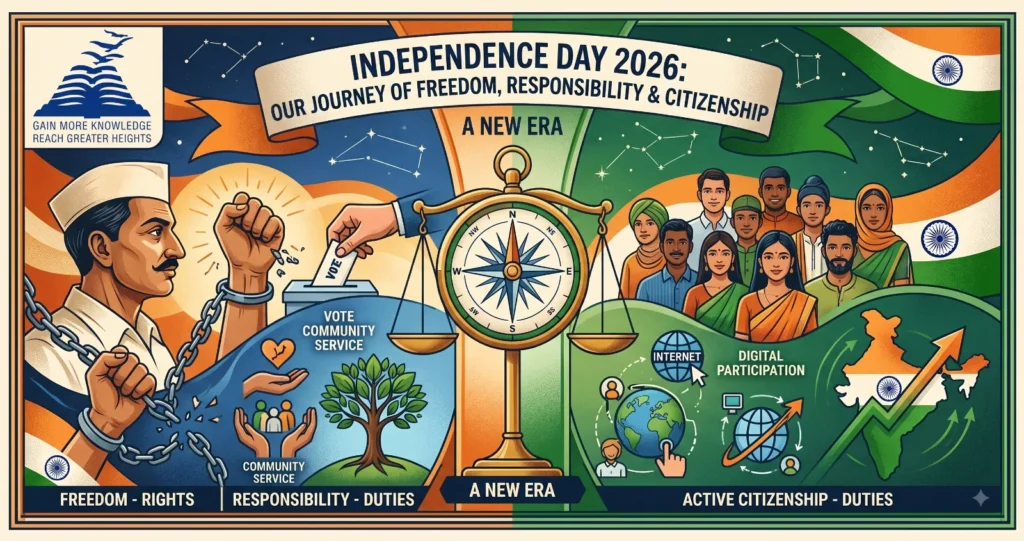
Independence Day 2026 invites Indians to remember the sacrifices that secured national freedom and reflect on the values needed to preserve it. The occasion connects patriotism with responsible citizenship, constitutional awareness and collective progress.
Why India Celebrates Independence Day on 15 August
India became free from British colonial rule on 15 August 1947. 15 August Independence Day commemorates this historic achievement and honours the countless individuals who participated in the national movement.
What Makes Independence Day 2026 Significant?
The Independence Day 2026 significance lies in two important milestones: India’s 80th Independence Day and the continuing national commemoration of 150 years of Vande Mataram.
India’s 80th Independence Day Celebration
India will observe its 80th Independence Day on 15 August 2026, completing 79 years as an independent nation. The occasion provides an opportunity to review the country’s progress and renew its commitment to unity and development.
Honouring 150 Years of Vande Mataram
Vande Mataram was composed by Bankim Chandra Chattopadhyay in the 1870s and later became an important symbol of India’s freedom movement.
Remembering the Struggle Behind India’s Freedom
Understanding the importance of Independence Day requires recognising the decades of resistance, public mobilisation and sacrifice that ultimately brought colonial rule to an end.
The Sacrifices of India’s Freedom Fighters
Freedom fighters endured imprisonment, exile, discrimination and death. Their courage reminds citizens that independence was achieved through extraordinary personal and collective sacrifice.
The Power of Unity in the Independence Movement
People from different regions, languages, religions and social backgrounds participated in the struggle. Their cooperation demonstrated how shared purpose can unite a diverse nation.
What Does Freedom Mean in Modern India?
Freedom today includes the ability to think, speak, learn, work and participate in public life with dignity while remaining within the framework of constitutional law.
Freedom as a Constitutional Right
The Constitution protects fundamental rights such as equality, freedom of expression, religious freedom and protection against exploitation, subject to constitutionally permitted restrictions.
Respecting the Freedom and Rights of Others
Individual liberty cannot be separated from mutual respect. Citizens should express their beliefs without silencing, threatening or discriminating against people who hold different views.
Why Freedom Must Be Accompanied by Responsibility
Rights become meaningful when people exercise them thoughtfully. Responsible freedom requires awareness of how personal decisions affect families, communities and the nation.
Making Responsible Choices in Everyday Life
Following rules, maintaining cleanliness, conserving resources and treating others fairly are simple ways to practise responsible citizenship.
Protecting the Nation’s Democratic Values
Citizens strengthen democracy by staying informed, questioning misinformation, respecting diverse opinions and participating peacefully in civic processes.
Using Freedom Without Causing Harm to Others
Freedom should never become an excuse for bullying, hate speech, violence or damage to property. Responsible behaviour protects both individual dignity and public welfare.
Understanding Responsible Citizenship
Responsible citizenship involves knowing one’s rights, fulfilling one’s duties and contributing constructively to society.
Knowing Our Fundamental Rights and Duties
Alongside fundamental rights, Article 51A outlines duties such as respecting the Constitution, protecting national unity, promoting harmony and safeguarding the environment.
Respecting the Constitution, Laws and National Symbols
Respect for the Constitution, lawful institutions, National Flag and National Anthem reflects a citizen’s commitment to India’s democratic identity.
Promoting Equality, Harmony and Unity in Diversity
Citizens can strengthen national unity by rejecting prejudice and treating people of every language, religion, region, gender and social background with dignity.
Protecting Public Property and the Environment
Public spaces and natural resources belong to everyone. Avoiding vandalism, reducing waste and conserving water are practical expressions of national responsibility.
Participating Actively in Community and Civic Life
Volunteering, helping neighbours and joining community initiatives allow citizens to contribute directly to social well-being.
The Role of Young Citizens in Building India’s Future
Young people can shape India through knowledge, creativity, integrity and service. Their choices will influence the country’s social, technological and economic future.
Using Education to Create Positive Change
Education helps students understand social challenges, develop solutions and apply their abilities for the benefit of others.
Practising Honesty, Discipline and Social Responsibility
Completing responsibilities sincerely, respecting time and admitting mistakes help young people become trustworthy citizens and future leaders.
Using Digital Freedom Responsibly
Students should verify information, protect personal data, respect online privacy and avoid spreading harmful or misleading content.
Contributing to the Vision of a Developed India by 2047
By building relevant skills, supporting innovation and addressing community challenges, young citizens can contribute to India’s development as it approaches the centenary of independence.
How Schools Can Nurture Responsible Citizenship
Schools in Bangalore can make citizenship education meaningful by connecting classroom lessons with leadership opportunities, ethical discussions and community experiences.
Teaching Constitutional and Democratic Values
Lessons, debates and student councils can help learners understand equality, justice, representation and respectful disagreement.
Encouraging Leadership and Community Service
The ICSE schools in Banashankari can encourage students to organise awareness campaigns, environmental projects and service initiatives that build empathy and accountability.
Making Independence Day Celebrations Meaningful
An Independence Day celebration becomes more educational when cultural programmes are combined with historical research, student reflections and discussions about present-day responsibilities.
Lessons Students Can Learn from Independence Day 2026
The schools in Banashankari can use the occasion to teach courage, unity, gratitude, democratic participation and respect for India’s cultural diversity.
From Celebrating Freedom to Fulfilling Our Responsibilities
Independence Day should inspire action beyond ceremonial observances. Honouring the past means using freedom wisely, helping others and contributing honestly to a stronger and more inclusive India.
Celebrating Freedom Through Responsibility and Citizenship
Independence Day 2026 is an opportunity for students to look beyond celebration and understand the deeper meaning of freedom, responsibility, and active citizenship. At Presidency School Banashankari, learners are encouraged to reflect on how individual choices, respect for others, civic awareness, and a sense of duty contribute to a stronger and more inclusive nation. Through assemblies, cultural presentations, classroom conversations, and student-led activities, the school helps children connect the values of independence with everyday actions such as honesty, discipline, empathy, and social responsibility. By making national occasions meaningful learning experiences, Presidency School Banashankari nurtures young citizens who appreciate their freedoms and understand their role in shaping India’s future.
Conclusion
Independence Day 2026 is not only a reminder of how India won its freedom, but also of how that freedom must be protected and strengthened by every generation. The sacrifices of the freedom movement gave citizens rights, opportunities, and a democratic framework; the responsibility now lies in using them with wisdom, respect, and integrity. For young people especially, patriotism can be expressed through honest effort, social responsibility, environmental awareness, digital discipline, and respect for diversity. As India moves towards its centenary of independence in 2047, the true spirit of 15 August will be reflected in citizens who value liberty, uphold constitutional principles, and contribute actively to building a more united, inclusive, and progressive nation.