Watch a group of three-year-olds for twenty minutes and something becomes immediately clear they are not wasting time. The two arguing over a toy are navigating their first real negotiation. Play, in the early years, is not the opposite of learning. It is its most natural and most powerful form. At every best play school in Bangalore worth choosing, the daily schedule of indoor and outdoor activities is not a way of keeping children occupied between meals it is a carefully designed learning architecture that builds the cognitive, physical, social, and emotional foundations that everything else in a child’s education will rest upon.
The Role of Play in Early Childhood Learning
When children are genuinely engaged curious, absorbed, actively exploring their brains are in the optimal state for learning. Neural connections form, language develops, problem-solving instincts are built, and emotional regulation is practised in the most naturally motivating context available. At top nursery schools in Bangalore, this research has translated into classroom design, daily scheduling, and teacher training. Play is not what children do when formal learning is done. Play is how formal learning happens in the early years and the quality of play experiences provided in preschool sets the developmental trajectory for everything that follows.
Why Play Schools Focus on Both Indoor and Outdoor Activities
Indoor and outdoor environments offer fundamentally different developmental opportunities and children need both. At nursery schools in Bangalore that are thoughtfully designed, the daily rhythm moves deliberately between both environments giving children the full range of developmental stimulation that early childhood requires.
Indoor Activities That Nurture Creativity and Imagination
The indoor environment is where some of early childhood’s most formative experiences happen. When a child sits down with paint, clay, or building blocks, they are not simply keeping themselves occupied they are developing the creative, cognitive, and fine motor capabilities that academic learning will later depend on.
At best pre-KG schools in Bangalore, these activities are not random they are intentionally sequenced, age-calibrated, and facilitated by teachers who know when to guide and when to step back and let discovery happen independently.
Outdoor Play for Physical Strength and Motor Development
The physical development that happens through outdoor play in the early years is foundational in ways that are easy to underestimate. Research consistently shows that children who have regular, adequate outdoor physical play in their early years demonstrate better concentration, better impulse control, and stronger academic engagement than those whose movement was limited. At top preschools in Bangalore, outdoor play environments are designed to offer graduated physical challenge climbing frames at different heights, balance beams of varying widths, open running spaces, sand and water play activities, and gardening corners that invite exploration at every developmental level.
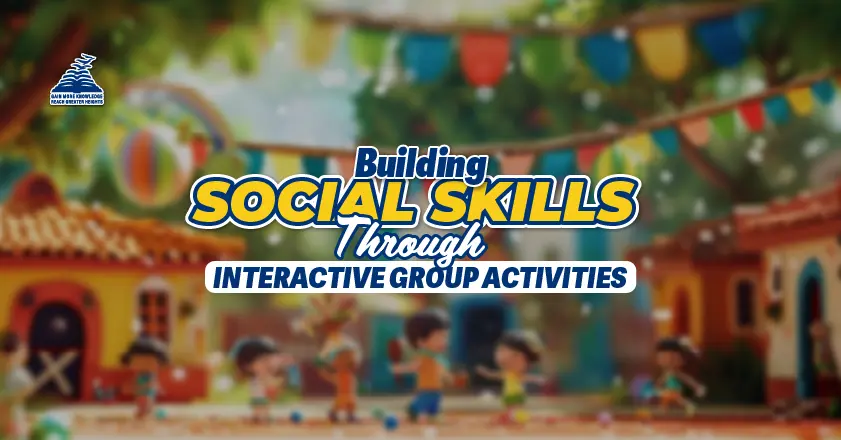
Building Social Skills Through Interactive Group Activities
When children play together, they must share, take turns, include others, resolve disagreements, communicate their needs, and experience both the satisfaction of collaboration and the frustration of conflict. At best ICSE schools in Bangalore and other quality institutions, the social capabilities built in the early years are visible in how confidently and collaboratively students engage in group learning throughout their school journey.
How Play Enhances Communication and Confidence
Language development in the early years is most rapid and most natural in the context of play. Children who are actively engaged building something, exploring something, playing alongside and with peers talk constantly. At the Top 10 ICSE Schools in Bangalore with strong early childhood foundations, the language confidence and vocabulary depth that students demonstrate in primary school is directly traceable to the quality of their early play-based language development. Teachers who create rich play environments and who engage children in conversation throughout those environments are building communicators. Outdoor play contributes to confidence in a distinct and equally important way.
Encouraging Exploration, Curiosity, and Problem-Solving
Play-rich environments that offer novel materials, open-ended challenges, and the freedom to experiment without fear of failure are curiosity incubators. The child who wonders what happens when two colours are mixed, who tries repeatedly to build a bridge that does not collapse, who investigates why some objects float and others sink is developing the same fundamental scientific and mathematical habits of mind that formal education will later formalise. At the best schools in Bangalore with strong early childhood programmes, this culture of exploration is deliberately cultivated teachers ask questions rather than provide answers, and children are consistently positioned as investigators rather than recipients.
Supporting Emotional Growth Through Fun Learning Experiences
Play-based learning environments support emotional growth in ways that structured, adult-directed instruction cannot. When a child’s block tower collapses and they choose to rebuild rather than give up, they are practising persistence. When they offer a piece of playdough to a distressed classmate, they are practising empathy. When they feel proud of a painting, they made themselves, they are experiencing the emotional reward of creative effort.
Creating a Healthy Balance Between Structured and Free Play
Quality early childhood programmes understand that both structured and free play are essential and that the balance between them matters. Structured play guided by teachers with specific developmental goals ensures that children are exposed to the full range of activities that early development requires. A well-designed play school day moves fluidly between these two modes, giving children the benefit of both:
| Type of Play | Examples | Key Developmental Benefits |
|---|---|---|
| Structured Indoor | Art projects, story circles, puzzles | Focus, language, fine motor skills |
| Structured Outdoor | Group games, nature exploration | Physical skills, teamwork, curiosity |
| Free Indoor | Dramatic play, block building | Imagination, autonomy, creativity |
| Free Outdoor | Open running, sandbox, climbing | Physical confidence, social negotiation |
How Activity-Based Learning Makes Early Education Meaningful
Activity-based learning in play school is not a pedagogical trend it is the application of what developmental science has consistently confirmed about how young children learn. When learning happens through doing, exploring, making, and playing, it creates the kind of neural encoding that passive instruction cannot. The meaningfulness of activity-based learning also comes from relevance.
The Lasting Benefits of Play-Centred Learning in Preschool Years
Research tracking children through primary and secondary school consistently finds that those who had rich, well-designed play-based early education demonstrate stronger academic performance, greater social competence, better emotional regulation, and higher intrinsic motivation than those whose early education was primarily formal and adult-directed.
Helping Children Learn, Grow, and Thrive Through Everyday Activities
The most important thing parents can understand about quality play school education is this: when a child comes home covered in paint, out of breath from running, and full of things they want to tell you about that is a sign of a day very well spent. The paint is art. The words tumbling out are language growing in real time. Every activity in a good play school indoor or outdoor, structured or free is a carefully considered contribution to the development of a whole, capable, curious, confident child.
How Presidency School Banashankari Enriches Early Childhood Development Through Purposeful Indoor and Outdoor Activities
At the foundational stage of a child’s educational journey, the perfect balance of stimulating indoor and outdoor activities is absolutely essential for comprehensive early development, and Presidency School Banashankari has designed an extraordinarily thoughtful and research-backed activity framework that nurtures every dimension of young learners’ physical, cognitive, emotional, and social growth from the very earliest years.
Dedicated early childhood educators at Presidency School Banashankari bring specialized expertise, boundless enthusiasm, and genuine nurturing care to every activity session, ensuring each child feels safe, valued, and deeply inspired to explore, discover, and grow at their own unique developmental pace.
For parents in Banashankari seeking a school that truly understands and magnificently delivers the profound importance of play-based learning in early childhood, Presidency School Banashankari is unquestionably the most trusted and enriching choice available today.
Conclusion
Play is not a break from learning in the early years it is learning in its most natural, powerful, and developmentally appropriate form. The indoor and outdoor activities that define a quality play school experience are not simply ways to keep young children engaged; they are carefully designed developmental opportunities that build the cognitive, physical, social, and emotional foundations that every subsequent stage of education depends upon.
Children who experience rich, well-balanced play-based early education arrive at primary school not just ready to learn, but genuinely equipped to learn with stronger language skills, greater curiosity, better emotional regulation, and the collaborative instincts that formal education will increasingly demand of them.
For parents choosing a play school, the most important question is not whether the school looks impressive on paper, but whether it truly understands the profound value of play.